
Navratri Saree Colours for 9 Days: Complete Guide for 2026
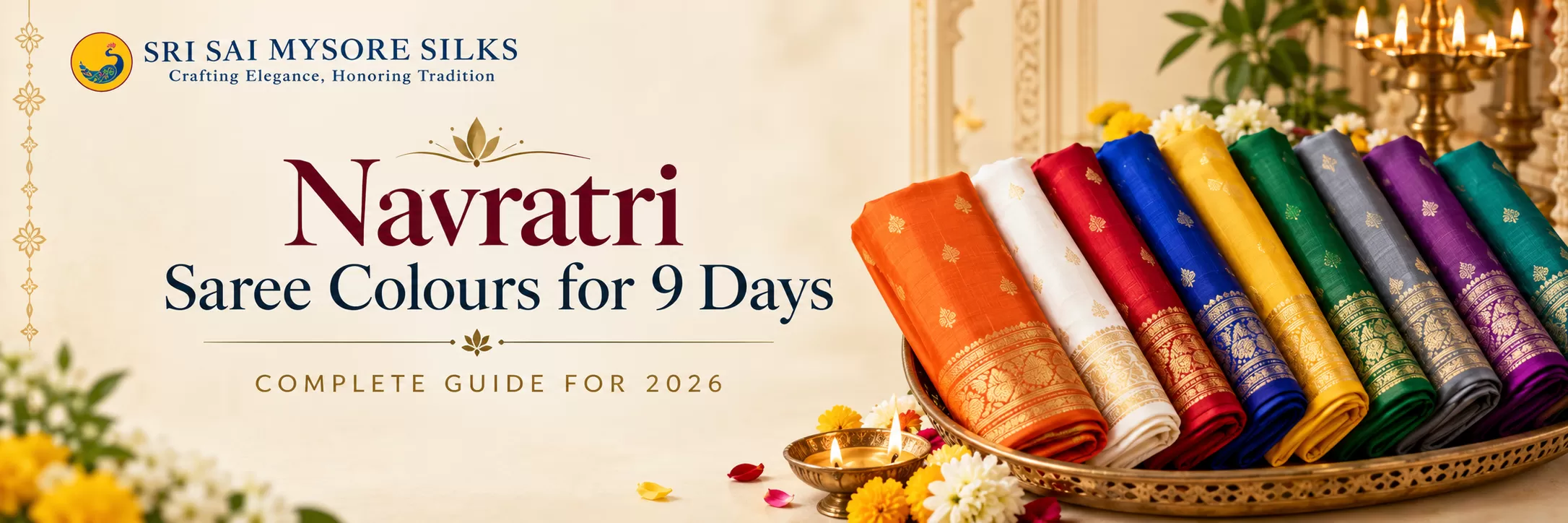
Navratri Saree Colours for 9 Days: Complete Guide for 2026
What Is the Navratri Colour Tradition?
Navratri is a nine-night festival dedicated to the Navadurga, the nine forms of Goddess Durga. Over time, a custom grew up around it: wearing a different colour each day. Many families, offices, temple groups and Garba circles now follow it, and it makes the celebration feel organised and joyful.
Is wearing these colours compulsory?
No. The colour list is a community tradition rather than a religious rule, and it is not tied to any scripture. Some regions and groups follow slightly different lists, especially for the last two days. If your family, office or Garba group has shared a list, follow that one so everyone matches
Why Do Navratri Colours Change Every Year?
The colours are assigned by weekday. Whichever weekday Day 1 falls on decides the colour that opens the sequence, and the rest follow in order. Navratri 2026 begins on a Sunday, so the list opens with orange. Next year the list will shift again, which is why last year’s colour chart can’t be reused.
Navratri Colour Calendar 2026: Day-Wise Colours at a Glance
Here is the commonly followed Navratri colours 2026 list.
-
Day 1: Sunday, 11 October: Orange (Maa Shailputri)
-
Day 2: Monday, 12 October: White (Maa Brahmacharini)
-
Day 3: Tuesday, 13 October: Red (Maa Chandraghanta)
-
Day 4: Wednesday, 14 October: Royal Blue (Maa Kushmanda)
-
Day 5: Thursday, 15 October: Yellow (Maa Skandamata)
-
Day 6: Friday, 16 October: Green (Maa Katyayani)
-
Day 7: Saturday, 17 October: Grey (Maa Kalaratri)
-
Day 8: Sunday, 18 October: Purple (Maa Mahagauri)
-
Day 9: Monday, 19 October: Peacock Green (Maa Siddhidatri)
9 Days of Navratri Colours: Meaning and Saree Styling Ideas
Day 1: Orange (11 October)
Orange stands for energy, warmth and new beginnings, which suits the first day, when the festival is invoked with Ghatasthapana.
-
Fabric idea: a soft Banarasi or Kanjivaram silk in burnt orange
-
Style tip: pair it with a gold zari border and temple jewellery
Day 2: White (12 October)
White represents peace, purity and calm devotion. It is linked with Maa Brahmacharini, who symbolises discipline and penance.
-
Fabric idea: white cotton silk or a handloom saree with a pastel or gold border
-
Style tip: keep accessories simple, with pearls or light gold
Day 3: Red (13 October)
Red is the colour of strength, power and auspicious celebration. It is a natural pick for the day of Maa Chandraghanta.
-
Fabric idea: a classic red silk saree with a rich zari pallu
-
Style tip: red pairs well with gold bangles and a traditional bindi
Day 4: Royal Blue (14 October)
Royal blue is associated with calmness, depth and creative energy. It is also one of the most flattering festive shades.
-
Fabric idea: royal blue Kanjivaram or Mysore silk
-
Style tip: silver or oxidised jewellery complements it well
Day 5: Yellow (15 October)
Yellow symbolises positivity, happiness and brightness. It is a natural fit for Thursday and for Maa Skandamata, the motherly form of the goddess.
-
Fabric idea: mustard, haldi or lemon-yellow silk or georgette
-
Style tip: a contrast blouse in maroon or green adds richness
Day 6: Green (16 October)
Green stands for growth, fertility and harmony with nature. It is one of the most loved shades in traditional sarees for Navratri.
-
Fabric idea: bottle green or parrot green silk, or a Patola-inspired weave
-
Style tip: gold zari looks especially good on green
Day 7: Grey (17 October)
Grey represents balance and strength. It is the trickiest shade on the list, because a flat grey can look dull in festive lighting.
-
Fabric idea: a silver-grey or charcoal saree with a metallic border
-
Style tip: choose a blouse with some shine or contrast, and add a colourful dupatta or accessories to lift the look
Day 8: Purple (18 October)
Purple reflects ambition, grace and royalty. Day 8 is Durga Ashtami, a major day of the festival, so many people dress a little more elaborately.
-
Fabric idea: a deep purple or aubergine silk saree with heavy zari work
-
Style tip: this is a good day for your most special saree
Day 9: Peacock Green (19 October)
Peacock green is a blend of green and blue. It is vibrant and rich, and it suits the final day, Maha Navami.
-
Fabric idea: peacock green Banarasi or Kanjivaram silk
-
Style tip: antique gold jewellery gives a regal finish
Best Saree Colours for Navratri: How to Choose the Right Shade
If you are shopping for the best saree colours for Navratri, a few practical points help.
-
Match the shade to your skin tone: jewel tones like royal blue and purple suit most complexions, while pastels work better in daylight.
-
Think about the setting: pujas call for subtler looks, while Garba evenings suit bolder, lighter fabrics.
-
Plan your wear count: you don’t need nine brand-new sarees. Pair a few with different blouses and dupattas.
-
Check the weather and comfort: you may be on your feet for hours, so choose fabrics you can carry easily.
Traditional Sarees for Navratri: Fabrics Worth Considering
Traditional sarees for Navratri come in many regional styles, and each has its own charm.
-
Banarasi: rich, with intricate zari work, good for Ashtami and Navami
-
Kanjivaram: durable and vibrant, with strong contrast borders
-
Patola: a Gujarati classic, well suited to Garba and Dandiya nights
-
Bandhani: a lightweight tie-dye style, comfortable for dancing
-
Cotton silk and handloom: easy to wear on regular working days
Silk Sarees for Navratri: Why They Remain a Favourite
Silk sarees for Navratri are popular because they hold bright colours well, look elegant in puja lighting, and can be worn again at weddings and other festivals. A silk saree in a versatile shade such as red, green or royal blue is a sensible investment, since it suits both the festival and later occasions.
-
Choose Banarasi or Kanjivaram for the most formal days
-
Choose lighter silks or cotton silk for the weekdays
-
Store them properly: wrap them in muslin and refold them now and then to protect the zari
Navratri Dress Colours for 9 Days: Beyond the Saree
If you don’t wear a saree every day, the same colours work for other outfits.
-
Salwar suits and kurtas for office days
-
Lehengas and chaniya cholis for Garba and Dandiya nights
-
Dupattas or stoles to add the day’s colour to a neutral outfit
-
Accessories such as bangles, bindis and bags for a subtle nod to the colour
Since Navratri 2026 starts on a Sunday, 12 to 16 October fall on working days in most countries. A dupatta or accessory in the day’s colour is an easy way to join in without a full outfit change.
Why Choose Sri Sai Mysore Silks?
Sri Sai Mysore Silks is an online saree store known for pure silk sarees, from classic Mysore silk to Banaras, Gadwal, Ikkat, Gajji and soft silk. Whether you are planning your Navratri saree colours for 9 days or looking for traditional sarees for Navratri, our collection has rich shades like royal blue, red, green, purple and orange to match the Navratri colour calendar 2026.
Need help choosing the best saree colours for Navratri?
WhatsApp at +91 9008364508.
Shop now: www.srisaimysoresilks.com
Follow us: Instagram | Facebook | Pinterest